LED Red Light Therapy Pad
The one that goes where you need it. A panel makes you sit in front of it — this you wrap around the thing that hurts.
At 80 × 50 cm it is the middle option in the range, and that is the point. Big enough to cover a whole lower back, a quad, a hamstring or both shoulders at once. Small enough to wrap a knee or a calf and carry to a hotel room at 3 kg. The PU and TPU shell is flexible, so it conforms to the part of you it is on rather than shining at it from across the room.
The honest part first, same as the rest of this range. Photobiomodulation is an active research field and the direction is encouraging, particularly around pain and function in musculoskeletal rehabilitation. But protocols in the published work vary enormously — wavelength, dose, distance, duration — and reviewers consistently name that inconsistency as the field's main weakness. So we will tell you what this thing is and how to use it properly, and we will not quote you a percentage.
Where it sits in the range
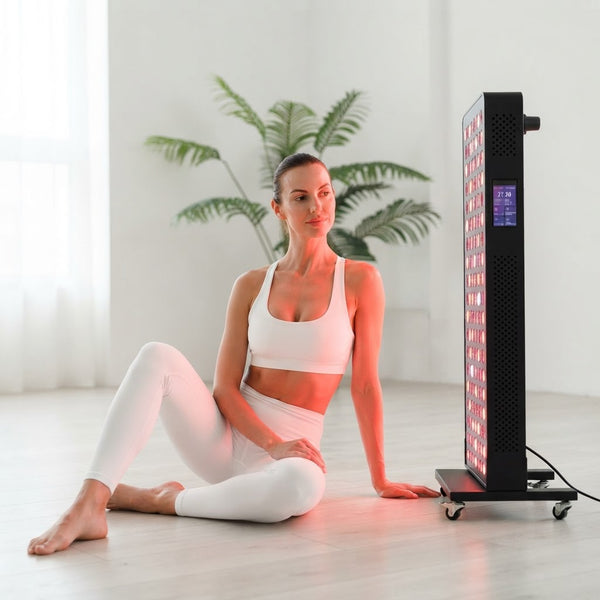
- The panel throws the most power, but from a distance, at one area, and you have to organise yourself around it
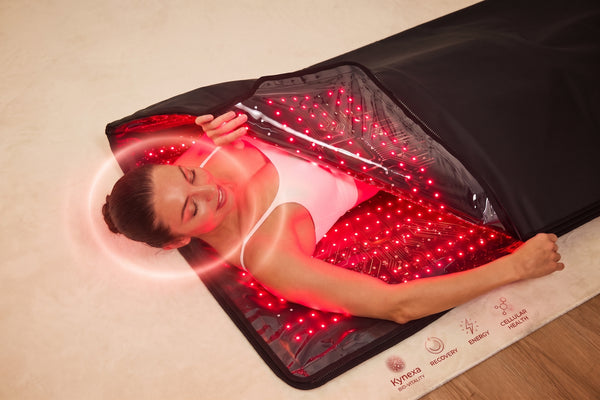
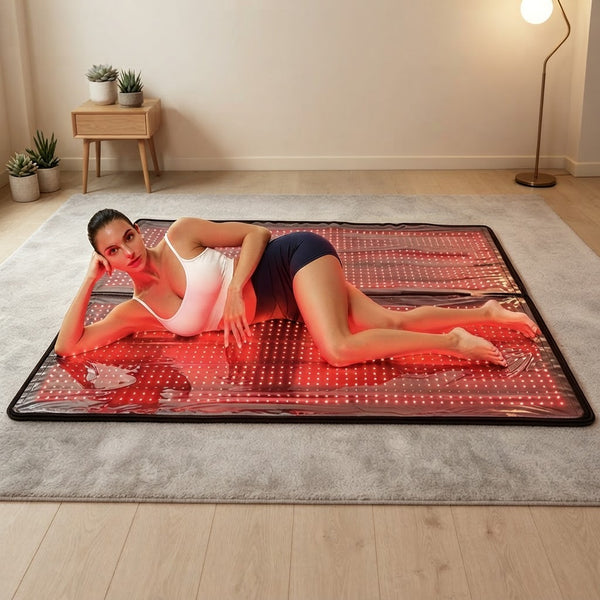
- The blanket covers all of you at once, but it is a lie-down-and-commit piece of gear
- This pad sits in contact with one region. Lower light density than the panel on paper — 112 mW/cm² against 190 — but it is against your skin rather than 30 cm away, and it removes the distance guesswork entirely. Put it on, set the timer, get on with something else
What is inside it
320 LED beads, three chips per bulb, on 5050 SMD packages. 64 beads run at 850 nm near-infrared, which is invisible to your eye and the deeper-reaching wavelength. The remaining 256 combine 660 nm visible red with 850 nm.
Five modes (P1–P5) and a 10 to 60 minute timer, running at 50 W.
Using it
Contact is the whole advantage, so use it: strap or lay the pad directly against skin where you can, since clothing sits between the light and you. Start at the shorter end of the timer and at a lower mode, and work up once you know how your skin handles it.
Consistency beats duration. Four short sessions a week will do more than one long one on a Sunday. And give it weeks rather than days before you decide what you think of it.
Before you start
The 660 nm beads are bright — do not look directly into the pad, and use eye protection if it is being used near your face.
If you have a light-sensitive condition such as lupus, or take photosensitising medication, talk to your doctor first. Same if you are pregnant. If you are being treated for an injury or a condition, ask the person treating you before adding this to it — and if something is not settling, get it looked at properly. This is recovery equipment. It is not a treatment and it is not a diagnosis.
Specifications
- 320 LED beads, 3 chips per bulb, 5050 SMD
- 64 beads at 850 nm; 256 beads combining 660 nm and 850 nm
- 112 mW/cm² light density
- 50 W rated power
- Five modes (P1–P5), adjustable 10–60 minute timer
- Flexible PU and TPU outer construction
- Pad size 80 × 50 cm
- Input AC 100–240 V; output 24 V, 5 A
- Packed 56 × 14 × 24 cm, gross weight 3 kg
Australian owned stock held in Brisbane
Free setup call walked through your first session
30-day returns try it against your routine
Buy outright no lock-in subscription
KYNEXA devices are not medical devices and are not intended to diagnose, treat, cure or prevent any disease. Always consult a qualified healthcare professional before starting a new therapy.